
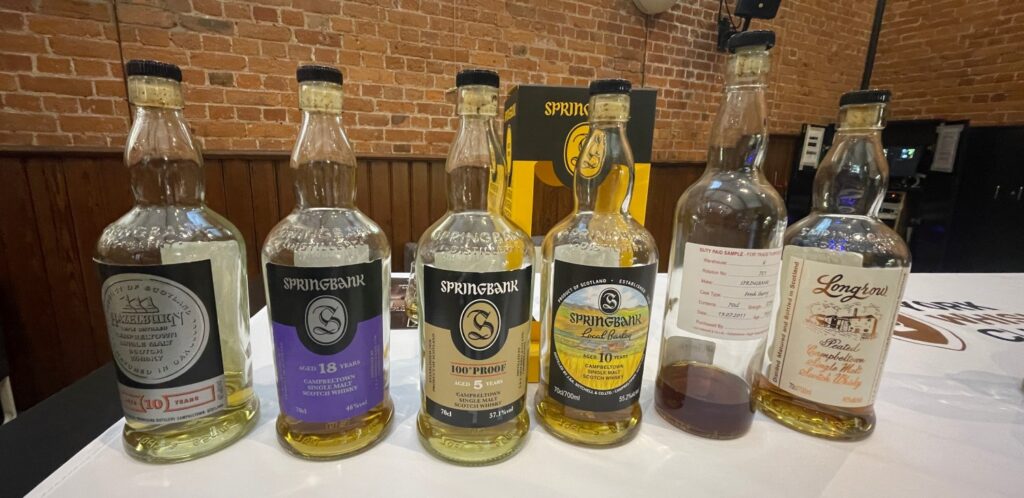
Friday night saw us back at Belfrey Hall for our second tasting in the new venue, and it was a rather special one: a sold-out Springbank evening hosted by Andrew from the distillery itself.
Springbank tastings are always likely to get whisky people’s attention, and this one was no exception. Thirty of us gathered for a proper Campbeltown line-up, with Andrew bringing seven drams, plenty of distillery stories, and just enough authority to keep the room vaguely under control once the glasses started emptying.
For one half of your hosting team, this was always going to be a slightly dangerous tasting. Springbank was one of Jim’s early whisky discoveries, a bottle of Springbank 15, back when such things could be found without refreshing seventeen websites and sacrificing a goat to the allocation gods, and he has followed the distillery’s rise from cult favourite to full-blown unobtanium ever since. As a Springbank Society and Cadenhead’s Society member, there was no danger of him pretending to be neutral.
Andrew was exactly the right host for the evening: knowledgeable, relaxed, funny, and clearly not his first rodeo. He gave us enough production geekery to keep the Springbank obsessives happy, without letting things become too dry or technical.
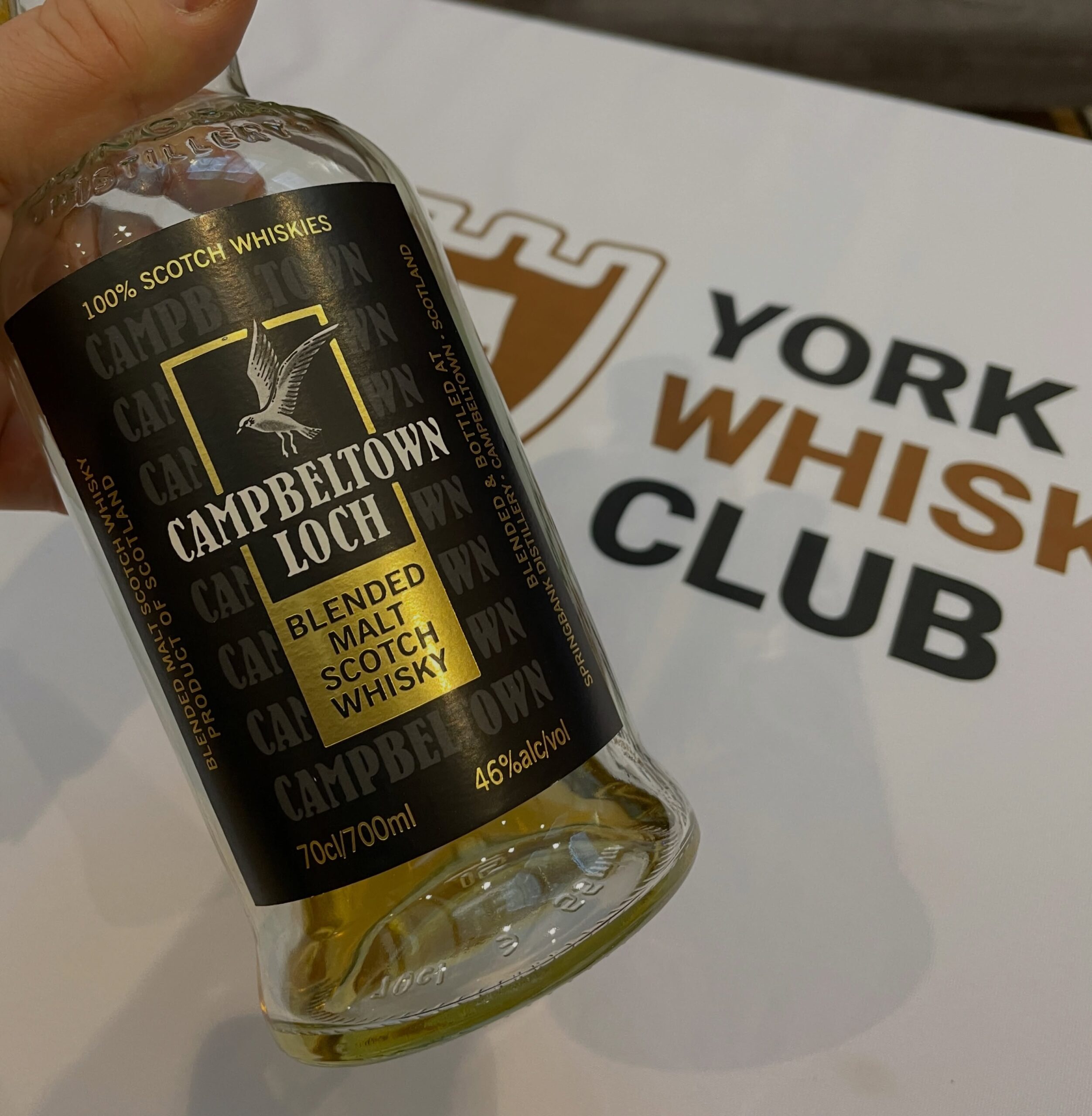
Campbeltown Loch Blended Malt, 46%
We don’t normally greet people at the door with a dram, but Campbeltown Loch made a very welcome exception. Andrew explained that the name revives an older Campbeltown blended whisky, although the modern version is a blended malt rather than a blended whisky. Bottled at 46%, non-chill filtered and natural colour, it brings together Campbeltown character in a more accessible and obtainable form.
With Springbank itself becoming increasingly hard to find, Campbeltown Loch feels like a very sensible bottle to have around: good value, readily available, and still genuinely interesting. There were lovely toffee and malt notes, a little Campbeltown oiliness, and enough depth for it to pick up a vote at the end of the night, which says plenty considering what it was up against.
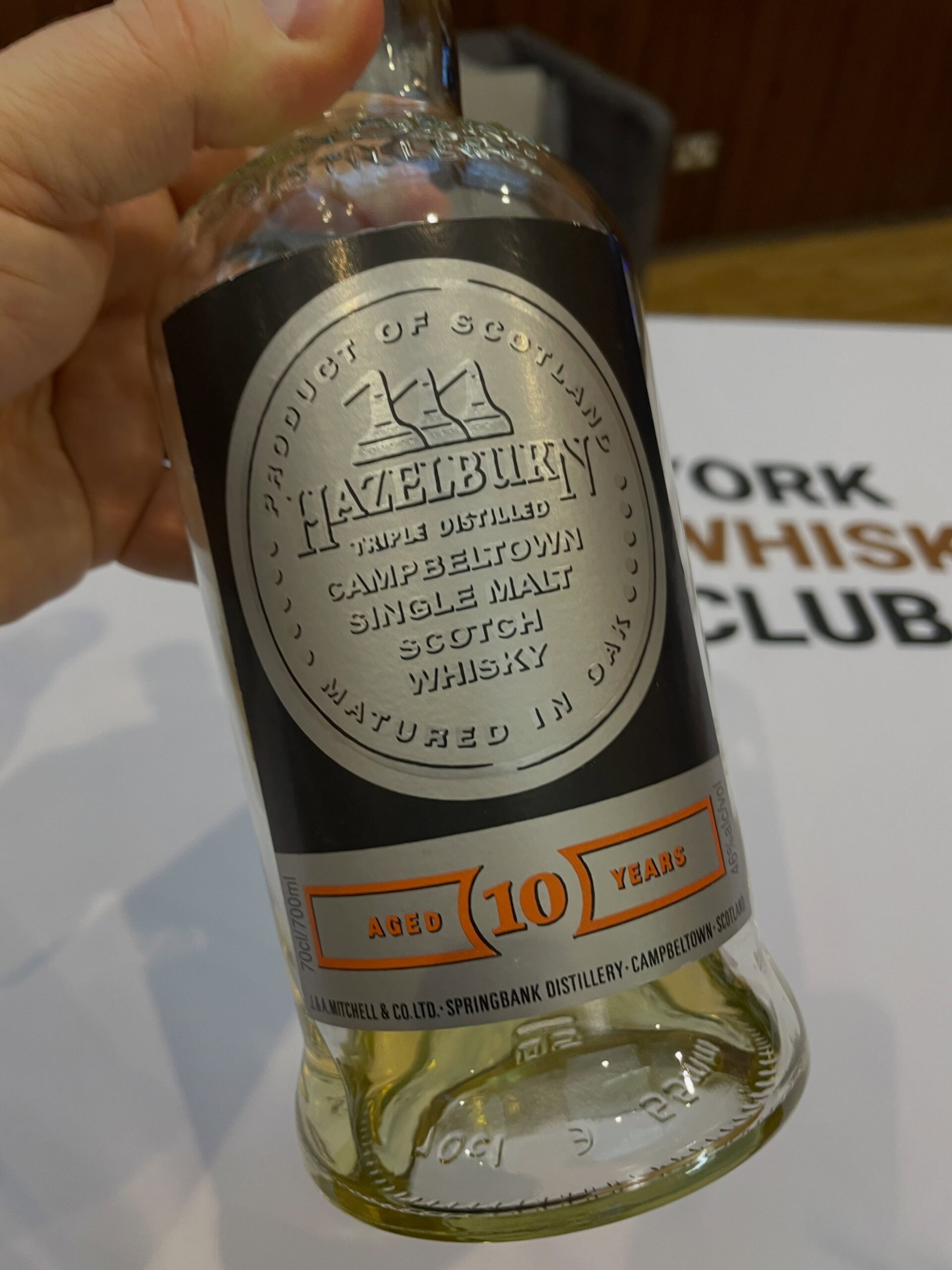
Hazelburn 10 Year Old, 46%
Our first formal dram was Hazelburn 10 Year Old, Springbank Distillery’s unpeated, triple-distilled style. Matured exclusively in bourbon casks and bottled at 46%, this was a gentle but very well-made way into the tasting.
Andrew linked Hazelburn’s triple distillation to Frank McHardy, the former Springbank distillery manager who had previously spent around a decade at Bushmills before returning to Campbeltown. That lighter Irish influence made sense in the glass: orchard fruit, citrus, vanilla, honeyed cereal and soft creaminess. It received two votes and did a fine job of easing us in.
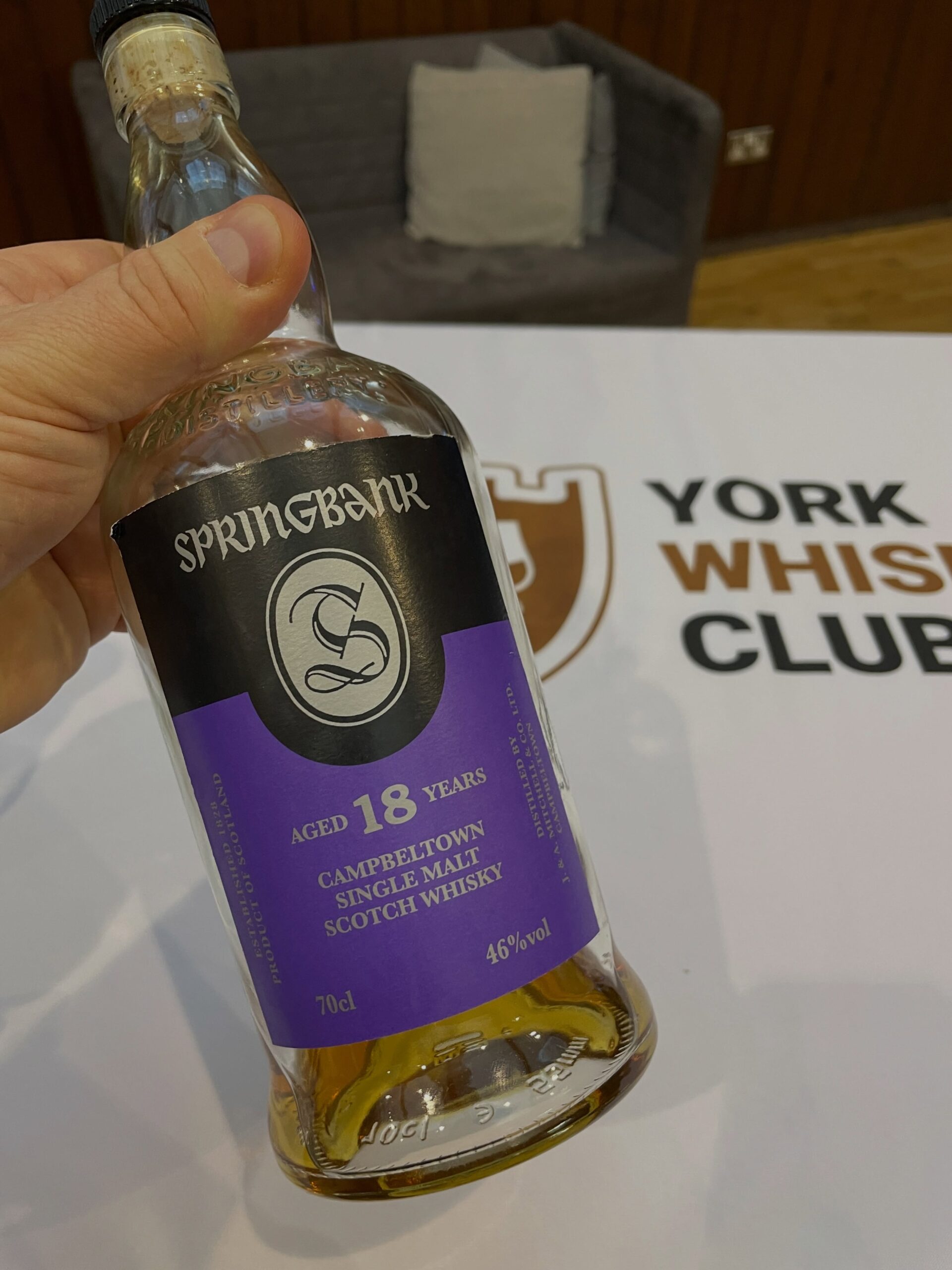
Springbank 18 Year Old, 2026 release, 46%
Next up was this year’s Springbank 18, and this was one of the first real “oh yes” moments of the evening. The 2026 release is made up of 50% bourbon casks, 45% Oloroso sherry casks and 5% rum casks.
Andrew talked about how the cask make-up of Springbank 18 can vary from year to year, depending on which mature casks are ready and good enough to use. Recent releases show the point nicely, with the 2022 release listed by Springbank as 65% bourbon and 35% sherry, while the 2024 release was 100% refill bourbon. For some distilleries, batch variation might be treated as a problem to solve. At Springbank, it feels more like a feature, not a bug.
The bourbon brought sweetness, oak, vanilla and structure; the Oloroso added richer dried fruit and spice; and the small rum cask component gave a subtle peppery lift without taking over. Springbank’s own notes for the 2026 release mention salted pretzels and cayenne pepper, which feels about right for that little 5% rum-cask nudge. It was very well received, taking seven votes and reminding everyone why Springbank’s older releases have the reputation they do.
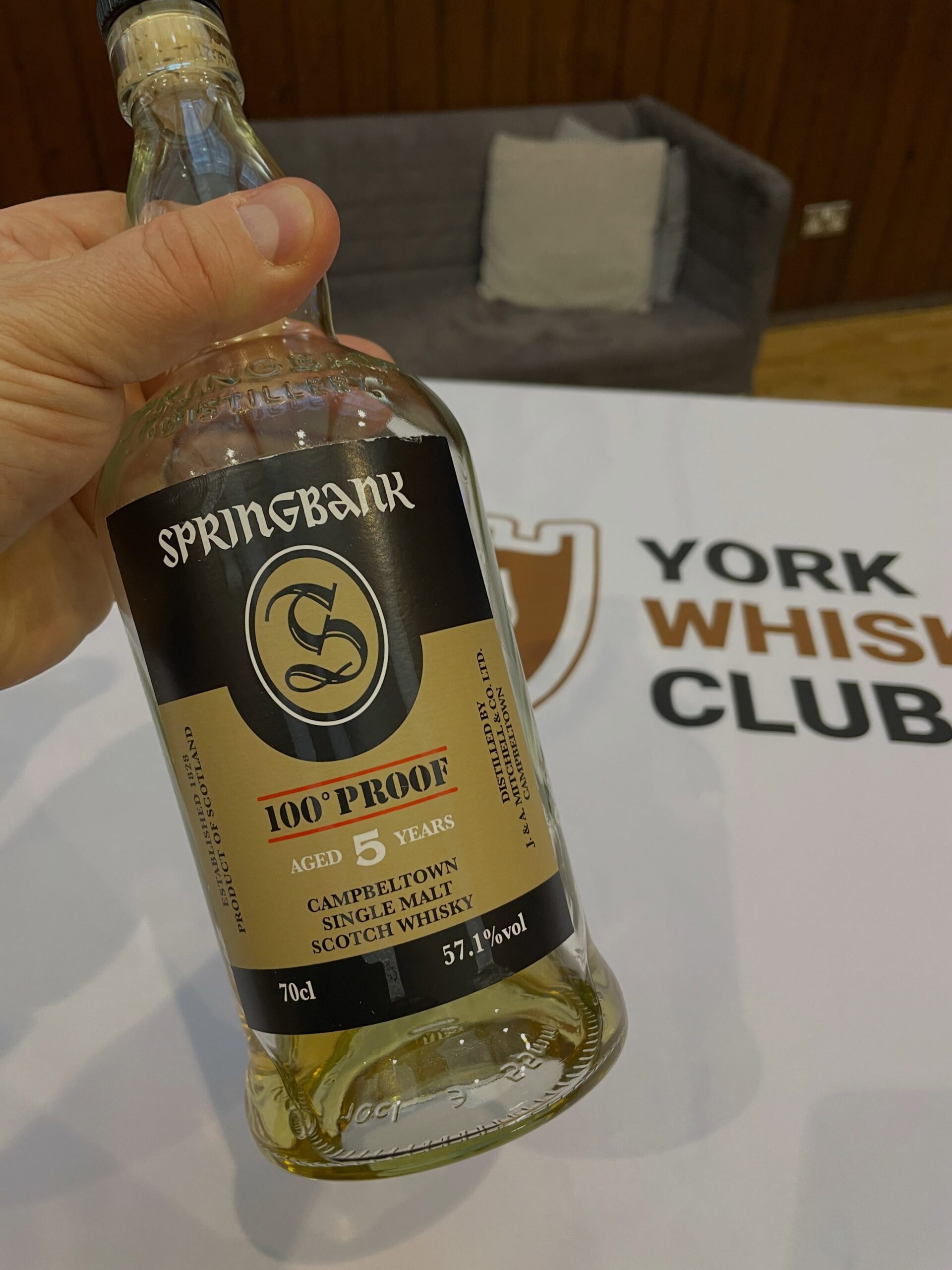
Springbank 100 Proof 5 Year Old, 2025 release, 57.1%
Dram three gave us a younger and punchier view of the distillery: Springbank 100 Proof 5 Year Old. Bottled in 2025 at 57.1%, matured entirely in bourbon casks, non-chill filtered and natural colour, this relatively new release allows more Springbank to make it into the world while older stock remains limited.
The “100 Proof” name is also a nod to the old British proof system, where 100 proof equates to 57.1% ABV. Andrew reminded us that this goes back to the days when spirit could be mixed with gunpowder and set alight to prove it was strong enough. Springbank being Springbank, their own launch video for the whisky apparently involved taking this historical explanation to its logical conclusion and blowing up a shed. Educational, responsible, and possibly not one to try at home.
At five years old and 57.1%, it was certainly more spirit-forward than the 18. There was vanilla, fresh cereal sweetness, spice and plenty of distillery character, though a few drops of water definitely helped it relax. It picked up two votes, and probably appealed most to those who like their whisky with a bit of muscle and honesty.
Springbank Local Barley 10 Year Old, 2025 release, 55.2%
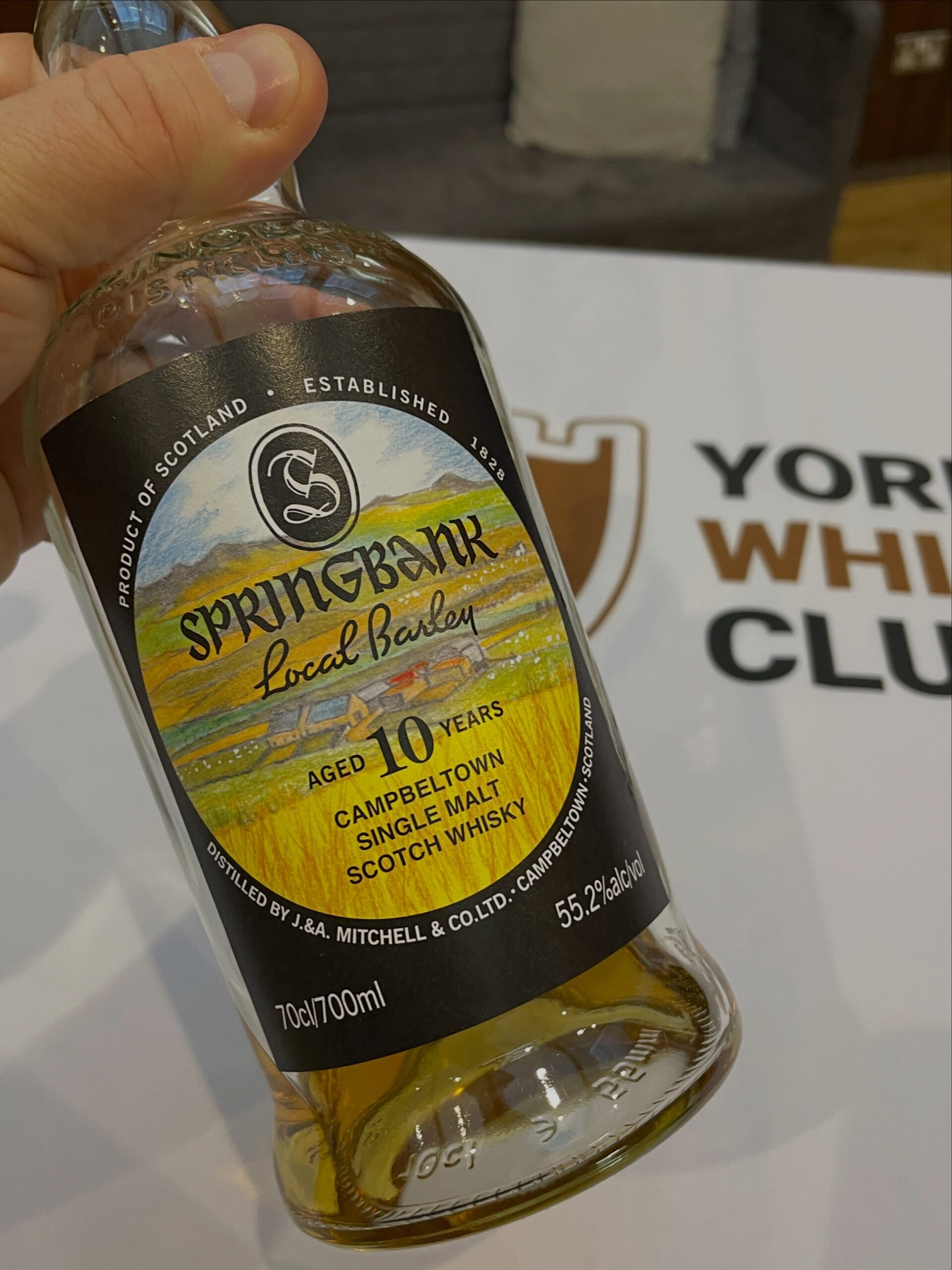
Then came the one your hosts had been waiting for: Springbank Local Barley 10 Year Old.
This was the 2025 release, bottled at 55.2%, with a cask make-up of 60% bourbon and 40% sherry. It was made using Bere barley, an older heritage variety grown in the Campbeltown area. Springbank describes Local Barley as a “grain to glass” limited edition, with different farms, barley varieties, cask maturations and ages giving each annual release its own character.
Andrew has been doing a series of club tastings, we understand we were the only club to get Local Barley. This was largely because Jasper specifically pestered him to bring a bottle. Proving, once again, that in whisky as in life, “don’t ask, don’t get” is sometimes the correct strategy.
This was Jim and Jasper’s personal favourite of the evening. Not because it was the loudest, richest, or most obviously luxurious whisky, but because it tasted genuinely different.
Andrew explained that Bere barley isn’t necessarily the easiest grain to work with. Its higher protein content can make production more awkward, particularly during mashing, and yields are lower than with more modern barley varieties. That extra effort helps explain why Local Barley commands a higher price even at 10 years old.
There’s also a wider story here. Springbank is deeply tied into Campbeltown and its local economy. Using local barley supports nearby farming, keeps heritage grain varieties in use, and reinforces the sense that this is a distillery still connected to place rather than just brand.
In the glass, the Local Barley had a cereal-led, slightly nutty quality that set it apart from the other Springbank drams. Springbank’s own notes for this release go into unexpectedly savoury territory, with mentions of shiitake mushrooms, tamari soy sauce, liquorice, campfire ash and treacle molasses, which makes sense of why it stood out so clearly in the line-up. We found bourbon sweetness, sherry warmth, oily texture, malt, spice and a lovely grain-driven character that kept pulling us back. It received six votes, but probably generated even more conversation than that suggests.
Springbank 14 Year Old Fresh Sherry Cask, cage bottling, 2025, 57.9%
The official dram of the night came next, and the room was not exactly wrong.
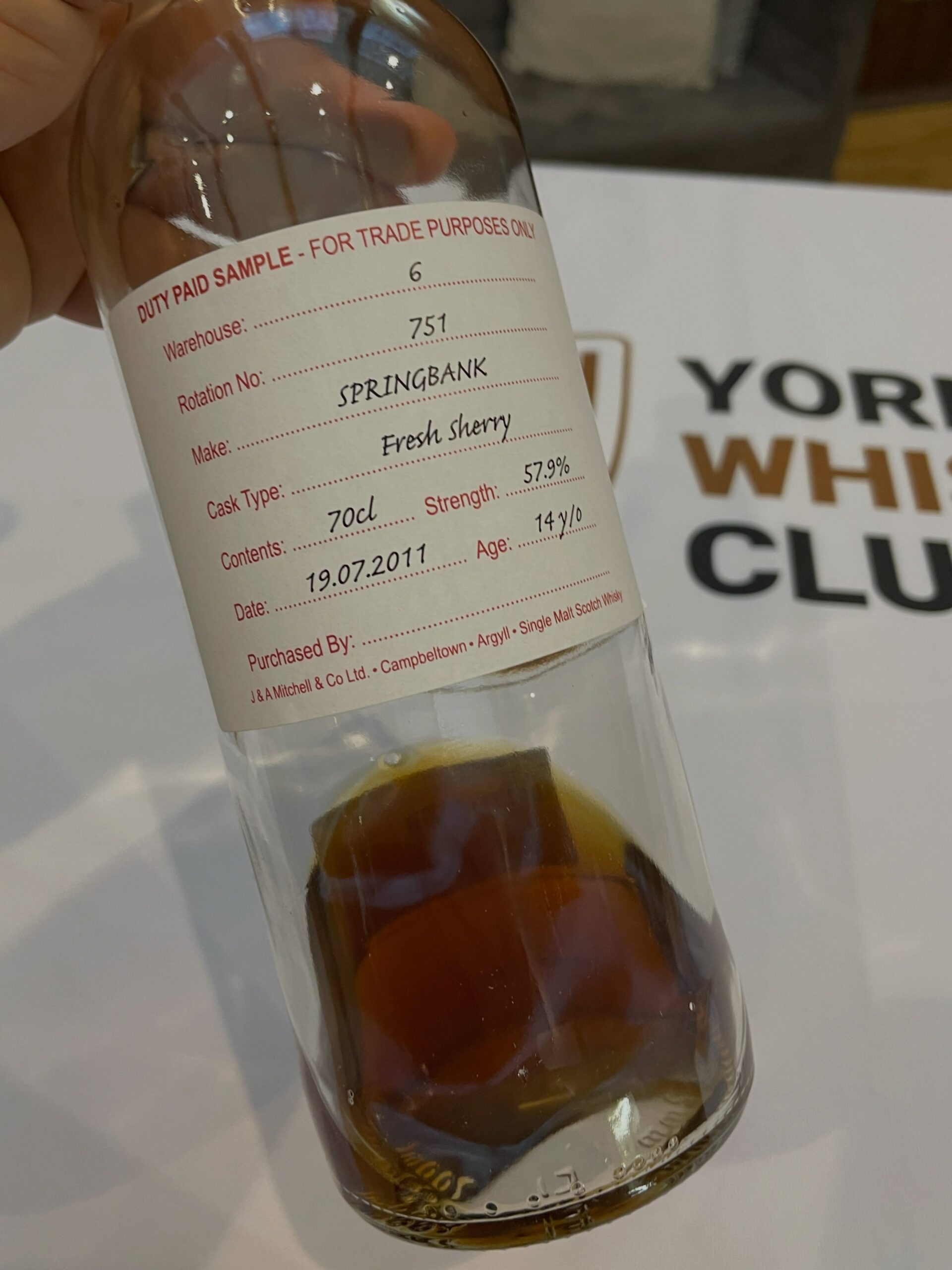
Dram five was a Springbank 14 Year Old Fresh Sherry Cask, a 2025 cage bottling from the distillery shop, bottled at 57.9%. Where Springbank specify “sherry” without further detail, Andrew explained that this means Oloroso unless otherwise stated. This was a single cask whisky, fully matured for 14 years in fresh sherry, and very much in “big sherry bomb” territory.
The cage bottling story is pure Springbank. The old cage was exactly what it sounds like: a simple wooden cupboard with chicken wire, filled with odd bottles drawn from interesting casks. No fancy packaging, no slick marketing campaign, just hand-labelled bottles from the warehouse and the sense that you had found something you probably wouldn’t see again. These days, the process is a little more controlled: a single cask is selected, and a small number of bottles are released each day through the cage cupboard in the distillery shop.
This was exactly the sort of bottle most of us would never normally get near without a trip to Campbeltown and a suspicious amount of luck. It was rich, smooth, powerful and very sherried: dried fruits, Christmas cake, Oloroso nuttiness, tobacco, dark sweetness and depth. But underneath the cask there was still Springbank: a little dunnage funk, a faint smoky edge and that hard-to-pin-down Campbeltown mystery.
It took 12 votes and was the clear dram of the night. Big sherry, big strength, big reaction. Your hosts could easily have voted for it too, but in the end went Local Barley because of that extra point of difference. The 14 was probably the more immediately impressive whisky; the Local Barley was the one that felt most distinctive.
Longrow Peated, 46%
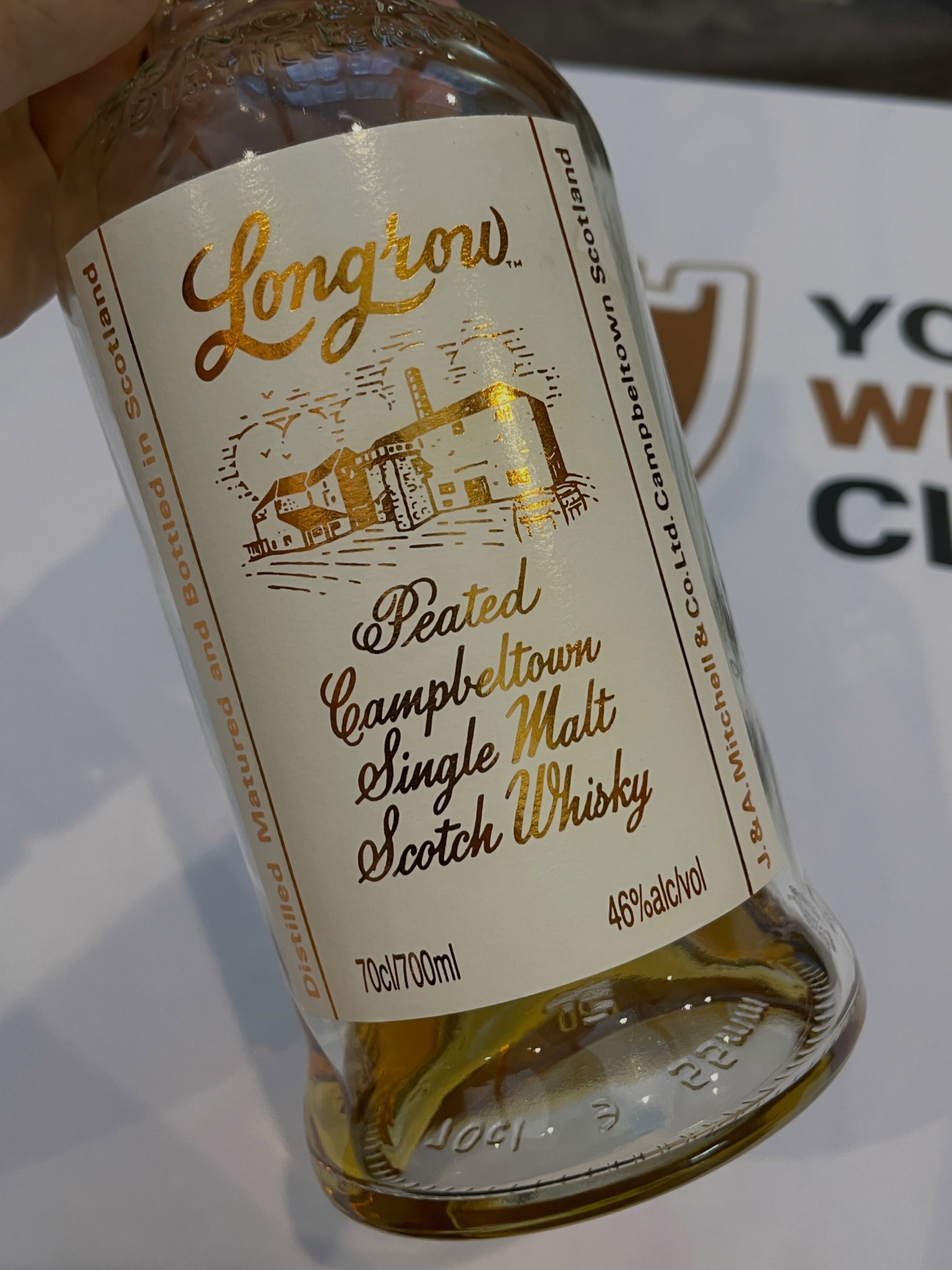
We finished with Longrow Peated, the standard core-range expression of Springbank Distillery’s heavily peated style. Bottled at 46%, non-chill filtered and natural colour, it uses a mixture of bourbon and sherry casks, though the exact proportions aren’t specified.
Longrow is named after one of Campbeltown’s lost distilleries, which once operated next door to Springbank. Springbank first produced Longrow in 1973, originally to provide a peaty, oily and robust component for a blend, and it has been a regular part of production since the 1990s.
This gave Andrew a neat way to tie together the three house styles made at Springbank Distillery. Hazelburn is unpeated and triple distilled. Springbank is lightly peated and famously “two-and-a-half times” distilled. Longrow is more heavily peated and double distilled.
The Longrow had a difficult job following the Springbank 14 cage bottling, and was probably a little overshadowed by the sherry monster before it. It received two votes and was certainly enjoyed, but the smoke was more restrained than some expected from something described as heavily peated. Longrow is often quoted at around 50-55 ppm, but the smoke develops gradually rather than simply shouting over everything else.
This wasn’t medicinal, iodine-heavy Islay peat in the Ardbeg mould. It was earthier, oilier and more Campbeltown in feel, with creaminess, vanilla, gentle smoke and a little sherry fruit in the background. It rounded out the tasting nicely, even if the previous dram was always going to be a hard act to follow.
A few final Springbank stories
Beyond the bottles, Andrew gave us a brilliant picture of why Springbank still feels so different. He spoke about Campbeltown’s history as one of Scotland’s great whisky centres, with around 30 distilleries at its peak, and about Springbank’s role today as a major local employer.
He also talked through the distillery’s unusually hands-on approach. Springbank remains one of the few distilleries doing essentially everything on site, from floor malting through to bottling. We particularly loved the detail about the direct-fired wash still, heated by open flame rather than steam coils, and the rummager bell that rings throughout the run. Long-serving staff apparently stop noticing the sound after a while, but if the bell stops, everyone knows something has gone wrong.
There was also some excellent good-natured banter with Dee, one of our regulars and a committed Irish whiskey fan who isn’t always first in line for the peat fire. Happily, the Springbank 18 did plenty to bring her round, proving that even the peat-wary can usually be negotiated with when the whisky is good enough.
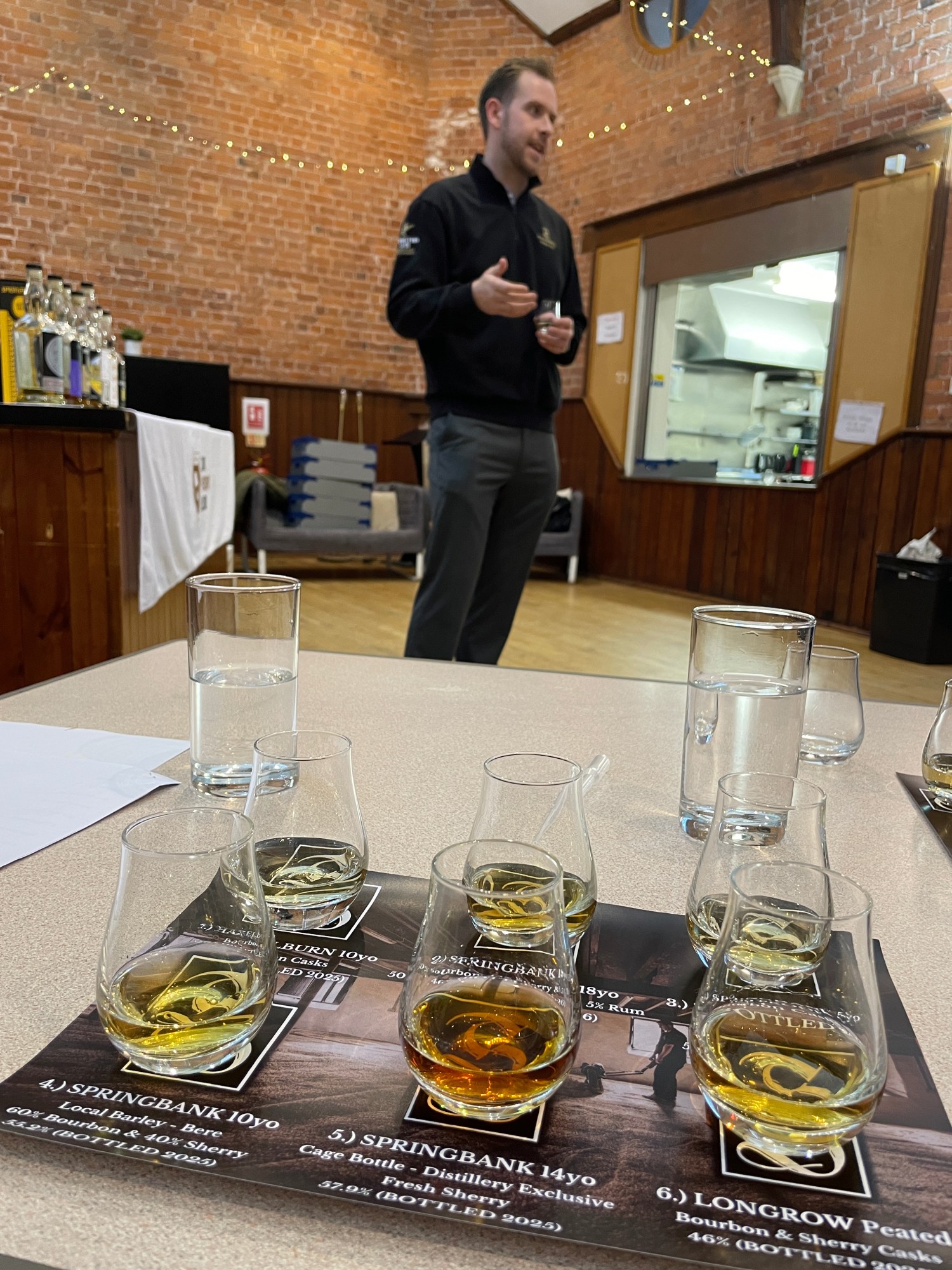
Dram of the night
Final voting looked like this:
Campbeltown Loch: 1 vote
Hazelburn 10 Year Old: 2 votes
Springbank 18 Year Old: 7 votes
Springbank 100 Proof 5 Year Old: 2 votes
Springbank Local Barley 10 Year Old: 6 votes
Springbank 14 Year Old Fresh Sherry Cage Bottling: 12 votes
Longrow Peated: 2 votes
So the Springbank 14 cage bottling was the clear winner, with Springbank 18 and Local Barley following close behind in the discussion if not quite in the numbers. The cage bottling won the room, but the Local Barley had your hosts’ hearts.
As we often do at our tastings, we finished the evening with a small giveaway. Having already successfully pestered Andrew for Local Barley, we also persuaded him to bring down a few Springbank pens and badges, which were gratefully received.
More importantly, this tasting also helped us continue raising money for St Leonard’s Hospice in York. Half of the proceeds from the ticket price were donated to the hospice, and we also had a donation option at checkout. Those who donated were invited to take home some of the remaining bottle ends from the evening, with the small exception of the Local Barley, which your hosts quietly removed from circulation for essential quality-control purposes.
Huge thanks to Andrew for coming down to York and giving us such an entertaining, generous and informative evening. Thanks also to Springbank for helping us put together a line-up that gave everyone a proper taste of what makes the distillery so special.
And, as ever, thank you to everyone who joined us at Belfrey Hall and helped support St Leonard’s Hospice. A sold-out room, seven Campbeltown drams, a generous guest host, and a few more pounds raised for a brilliant local cause. Not a bad Friday night in York.